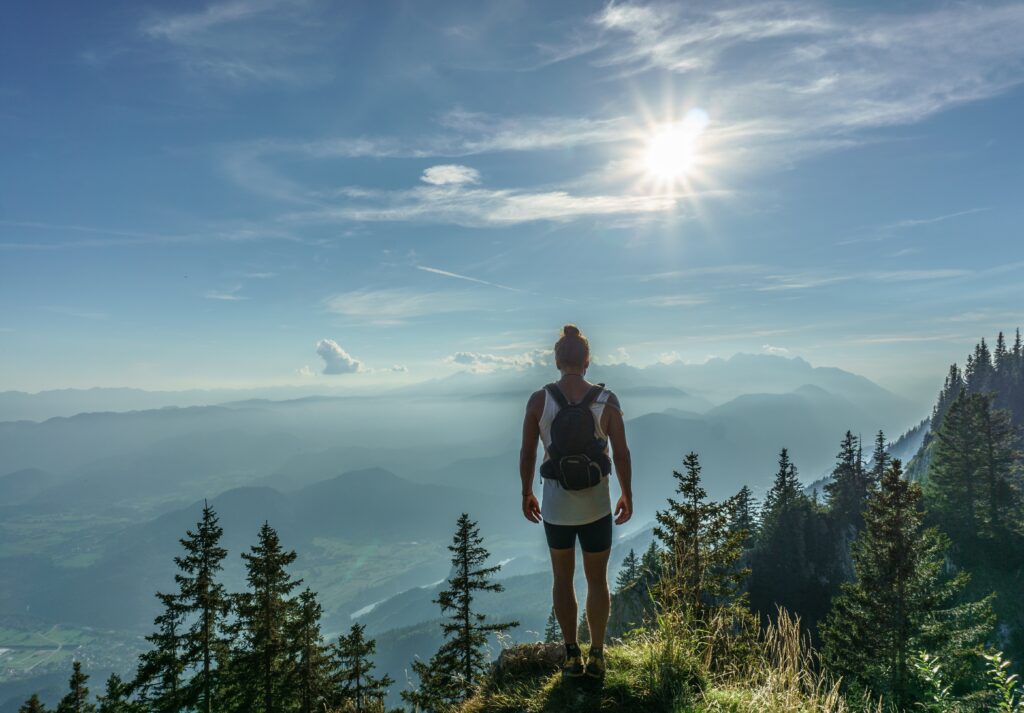
I used to think trekking was all about the terrain—the altitude, the gear, the weather apps, the maps. I’d lace up my boots, pack my essentials, and chase summits like they held the answers to something I couldn’t name. But somewhere along the way, I realized the real expedition wasn’t out there. It was within.
The journey inward begins quietly. It doesn’t announce itself with a dramatic sunrise or a breathtaking ridge. It starts when the noise fades—when the signal drops, when the trail stretches ahead in silence, and you’re left with nothing but your breath and your thoughts.
I remember one particular trek in the Himalayas. The path was steep, the air thin, and my legs screamed with every step. But what I recall most vividly isn’t the view from the top—it’s the moment I sat alone on a moss-covered rock, surrounded by pine trees, and felt something shift. I wasn’t thinking about work, or deadlines, or the version of myself I perform for the world. I was just… there. Present. Real.
That’s the magic of trekking. It strips away the layers. Out here, there’s no need to impress, no need to pretend. The mountains don’t care who you are. They don’t judge your pace or your past. They simply invite you to walk, to listen, to feel.
The rhythm of your heartbeat. The way your thoughts loop and spiral. The stories you tell yourself—about who you are, what you’re capable of, what you deserve. Some of those stories are empowering. Others are quietly destructive. But in the stillness of the trail, you begin to sort them out.
I’ve met people who came to the mountains to escape heartbreak, burnout, grief. And I’ve seen how the trail doesn’t just offer distraction—it offers reflection. There’s something about walking for hours, surrounded by nature’s raw beauty, that makes you confront your own truths. You can’t outrun your mind when your feet are moving slowly and deliberately. You face it. You walk with it. And eventually, you make peace with it.
The journey inward isn’t always comfortable. Sometimes it brings up memories you’ve buried. Sometimes it forces you to admit things you’ve avoided. But it also brings clarity. It reminds you of your strength—not the kind measured in kilometers or elevation gain, but the kind that shows up when you’re tired, lost, and still choose to keep going.
I’ve learned that solitude isn’t loneliness. It’s a gift. When you trek alone, or even in quiet company, you create space for your inner voice to speak. Not the voice shaped by society or social media, but the one that whispers your deepest desires, your quiet fears, your authentic self.
And when you return from the trek, you carry that voice with you. You walk back into your life with a little more awareness, a little more grace. You start to notice the beauty in everyday things—the way the morning light hits your window, the sound of rain on your roof, the warmth of a shared smile. You become more grounded, more intentional.
So yes, trekking is about the landscapes. But it’s also about the inner terrain—the emotional ridges, the mental fog, the spiritual summits. It’s about discovering that the most profound journey doesn’t require a passport or a guidebook. It just requires presence.
If you’re planning your next trek, I invite you to pack light—not just physically, but emotionally. Leave behind the expectations, the comparisons, the need to document every moment. Walk slowly. Breathe deeply. Listen to the wind, the birds, your own heartbeat.
Because somewhere between the trailhead and the summit, you might just find yourself.
And that, my friend, is the most beautiful destination of all.